PPWR Compostable Packaging: What Changes for Tea Bags, Coffee Capsules and Fruit Labels in 2028?
From 12 February 2028, specific packaging formats must meet new EU compostability requirements. But not all coffee capsules or biodegradable packaging are treated alike. We explain Article 9, the European Commission's clarification and what businesses should prepare.
PPWR Compostable Packaging: What Changes for Tea Bags, Coffee Capsules and Fruit Labels in 2028?
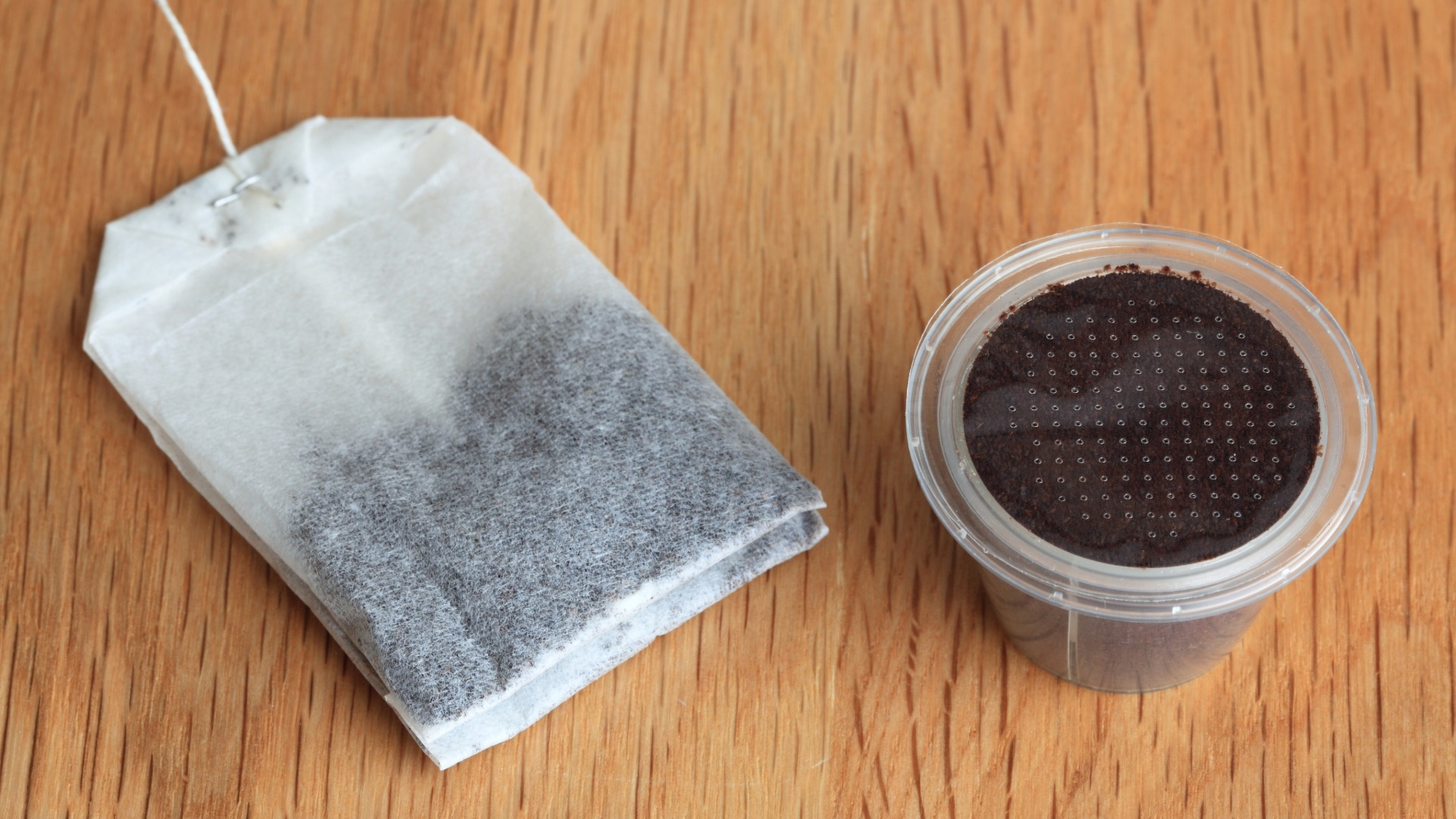
A tea bag, a coffee capsule and a small sticker on an apple may seem to have very little in common.
Under the EU Packaging and Packaging Waste Regulation (PPWR), however, all three can raise questions about compostability.
From 12 February 2028, certain packaging formats will need to meet specific compostability requirements under Article 9 of Regulation (EU) 2025/40.
The rules are not as simple as requiring every biodegradable package to become compostable. Some requirements apply across the EU, others depend on decisions taken by individual Member States, and different types of coffee packaging are treated differently.
For food producers, beverage brands, retailers, packaging manufacturers and suppliers, understanding these distinctions is essential before making material and packaging-design decisions.
In brief: What does PPWR require for compostable packaging?
Article 9 establishes three important principles:
From 12 February 2028, permeable tea, coffee and other beverage bags, certain soft single-serve beverage units, and sticky labels affixed to fruit and vegetables must meet industrial compostability requirements.
Member States may require additional packaging formats, including certain non-metallic coffee capsules and lightweight plastic carrier bags, to be compostable under specified conditions.
Other packaging, including packaging made from biodegradable materials, generally needs to be designed for material recycling rather than automatically being directed into composting.
Packaging covered by Article 9(1) must also meet home-compostability requirements where the relevant Member State requires them.
The distinction matters because biodegradable, compostable, bio-based and recyclable do not mean the same thing.
Which packaging must be compostable by February 2028?
Article 9(1) identifies specific packaging categories for which compostability becomes mandatory.
1. Tea bags and permeable beverage bags
The requirement covers permeable bags containing tea, coffee or other beverages that are intended to be used and disposed of together with the product.
Importantly, the rule is not limited to plastic-based tea bags.
In its guidance published on 10 June 2026, the European Commission clarified that Article 9(1) is material-neutral.
That means a paper-based tea bag may also fall within the requirement.
Example: A tea producer purchases a paper-based filter bag from a packaging supplier.
The supplier confirms that the bag is made primarily from plant fibres.
That information alone does not demonstrate that the complete bag meets the applicable compostability requirements.
The manufacturer needs to consider the finished packaging, including any relevant sealants, adhesives or other components, and the evidence demonstrating its compostability.
2. Soft single-serve beverage units
Article 9(1) also covers soft after-use system single-serve units containing coffee, tea or another beverage, intended to be used and disposed of together with the product.
These products may look different from conventional tea bags, but their intended use and packaging characteristics bring them within the same provision.
The Commission has confirmed that the requirement applies regardless of the material used.
Businesses should therefore classify their products according to the legal definition rather than relying exclusively on the material description supplied by a packaging manufacturer.
3. Sticky labels on fruit and vegetables
The requirement also covers sticky labels affixed to fruit and vegetables.
These include the small identification labels commonly used on apples, bananas, citrus fruits and other fresh produce.
Although such labels represent a very small proportion of a product's overall packaging weight, they can enter food-waste streams when consumers discard fruit and vegetable peelings.
Their adhesive properties, surface materials and compatibility with composting processes therefore become relevant.
For retailers and fresh-produce suppliers, the practical challenge is identifying which labels are currently being used and obtaining suitable technical evidence from label manufacturers.
Do all coffee capsules have to become compostable?
No. The PPWR distinguishes between different types of single-serve beverage packaging.
This is an important distinction for coffee producers and businesses using capsule systems.
Permeable bags and qualifying soft single-serve units fall under the mandatory EU-wide requirement in Article 9(1).
Non-permeable single-serve units intended for use in beverage machines are addressed separately.
Under Article 9(2), Member States may require certain non-metallic units to be compostable where the conditions concerning bio-waste collection and treatment infrastructure are satisfied.
This does not create a general EU-wide requirement for all rigid coffee capsules to become compostable from February 2028.
Example: A company sells coffee in rigid plastic capsules in several EU countries.
It should not assume that replacing every capsule with a compostable version is automatically required under Article 9(1).
Instead, it needs to determine the applicable packaging classification and assess whether the Member States in which it sells its products have exercised the flexibility provided by Article 9(2).
This is particularly important for brands managing one packaging specification across multiple European markets.
Does biodegradable packaging automatically comply with PPWR?
No.
The terms used to describe environmentally preferable packaging are often confused.
Bio-based packaging refers to the origin of the material feedstock, which is derived wholly or partly from biological resources.
Biodegradable packaging describes material capable of biological decomposition under particular conditions.
Compostable packaging must meet relevant requirements concerning decomposition under specified composting conditions.
Recyclable packaging is designed to be recovered through material recycling in accordance with the applicable regulatory criteria.
These properties are not interchangeable.
For example, a plastic derived from renewable feedstocks is not necessarily compostable.
Similarly, a material described as biodegradable may not decompose under the conditions used in an industrial composting facility.
The PPWR addresses these issues through different provisions.
Article 8 concerns bio-based feedstock, Article 9 concerns compostability, and Article 6 addresses recyclability.
For a discussion of possible future rules concerning bio-based plastics, see our previous article, Can Bio-Based Plastic Count Toward PPWR Targets?.
Industrial compostability versus home compostability
Another important distinction concerns where packaging is expected to decompose.
Industrial composting facilities operate under controlled conditions, including specified temperatures, treatment processes and retention times.
Home composting takes place under much more variable conditions.
A material that performs adequately in an industrial composting facility will not necessarily break down in a home composting system.
Article 9(1) establishes industrial compostability requirements for the specified packaging formats and also requires compatibility with home-composting standards where Member States mandate this.
The distinction should be reflected in both packaging specifications and supplier evidence.
Businesses should avoid assuming that an industrial compostability certification is sufficient to support a home-compostability claim.
What standards should packaging suppliers use?
The PPWR requires the development or updating of harmonised technical standards for compostable packaging.
The existing European standard EN 13432 provides a useful reference for industrial compostability.
However, the European Commission's June 2026 guidance explains that EN 13432 can currently be used as guidance but does not, by itself, provide a presumption of conformity with the future PPWR harmonised compostability requirements.
The Commission also addresses the development of harmonised standards for home compostability.
This creates a practical challenge for companies making packaging decisions before all the updated technical specifications are available.
Supplier certifications, test reports and material declarations remain useful, but businesses should understand precisely what each document demonstrates.
For example, a certification referring to one material formulation may not automatically cover a finished package incorporating additional adhesives, coatings or components.
What about packaging labels and consumer disposal instructions?
Compostability requirements and consumer labelling requirements have different implementation timelines.
Article 12(1) introduces harmonised packaging labels from 12 August 2028, or 24 months after the relevant implementing acts enter into force, whichever is later.
For packaging covered by Article 9(1), and Article 9(2) where applicable, the harmonised label must communicate that the material is compostable, is not suitable for home composting and should not be discarded in nature.
Businesses should therefore distinguish between:
the date from which the packaging must meet the relevant compostability requirements;
the later applicable date for harmonised packaging labelling;
any national requirements concerning home compostability and waste disposal.
A material change made today should take account of these future labelling needs, but businesses should avoid finalising harmonised EU label artwork before the applicable technical specifications are confirmed.
For more information, see our guide to PPWR Packaging Labelling Requirements for 2028.
What should businesses do now?
Companies do not need to redesign their entire packaging portfolio immediately.
They do need to identify the packaging formats that may be affected and determine what information is missing.
1. Identify packaging covered by Article 9
Review packaging specifications and identify permeable beverage bags, soft single-serve beverage units, fruit and vegetable labels, rigid coffee capsules and other potentially relevant formats.
Separate packaging subject to mandatory EU requirements from packaging potentially affected by national measures.
2. Review existing supplier evidence
Request current material specifications, information about coatings and adhesives, relevant compostability test reports and details of the standards used.
Confirm that the evidence applies to the packaging actually being purchased.
3. Check the destination markets
For packaging formats subject to Member State discretion, identify the countries in which the products are placed on the market.
Review applicable national requirements rather than assuming that all EU markets apply identical compostability rules.
4. Assess packaging development timelines
Some packaging changes require material qualification, production trials, shelf-life testing and supplier approval.
These activities can take considerable time, especially in food-contact applications.
Companies should identify packaging changes that could affect product performance, safety or sourcing arrangements.
5. Connect the evidence to technical documentation
Article 9(4) requires compliance with the relevant compostability and recyclability provisions to be demonstrated in the packaging's technical information under Annex VII.
This makes packaging identification, specifications, test results and traceability important.
For a detailed explanation of these requirements, see PPWR Technical Documentation: What Evidence Must Support Packaging Conformity?.
The objective is not simply to obtain a supplier certificate. It is to understand which requirement applies, what evidence supports compliance and which packaging specification that evidence covers.
Frequently asked questions
When do PPWR compostable packaging requirements apply?
The mandatory compostability requirements for the packaging identified in Article 9(1) apply from 12 February 2028. Other PPWR provisions have different application dates.
Do paper tea bags need to be compostable under PPWR?
Yes, where they meet the relevant definition in Article 3(1)(1)(f). The European Commission has clarified that Article 9(1) is material-neutral and can apply to paper-based beverage bags.
Must every coffee capsule be compostable?
No. The mandatory EU requirement covers certain permeable and soft single-serve beverage packaging. Member States may separately require certain non-metallic, non-permeable beverage units to be compostable under Article 9(2).
Is EN 13432 certification sufficient for PPWR compliance?
Not automatically. The Commission's June 2026 guidance states that EN 13432 can be used as guidance while updated harmonised standards are developed, but it does not currently provide a presumption of conformity with the new PPWR compostability requirements.
Do fruit stickers need to be compostable?
Yes. Sticky labels affixed to fruit and vegetables are explicitly covered by Article 9(1) and must meet the applicable requirements by 12 February 2028.
Does compostable mean the packaging can go into any household compost bin?
No. Industrial compostability and home compostability are different. Disposal arrangements also depend on the applicable national or local waste-collection system.
The bigger picture: Packaging materials need to be assessed against their intended end-of-life route
The PPWR does not establish compostability as the preferred solution for all packaging.
Instead, it identifies particular applications where composting may offer benefits and establishes separate requirements for other packaging to support material recycling.
For businesses, this means packaging decisions should consider more than the origin or marketing description of the material.
A suitable packaging specification needs to account for intended use, legal classification, end-of-life requirements, technical performance and the evidence necessary to demonstrate compliance.
The practical starting point is to identify which packaging formats fall under Article 9, which requirements apply in each market and what technical information is needed to support future compliance.
Continue learning with PPWR Academy
Understanding the regulation is one part of implementation. Businesses also need to translate the requirements into packaging specifications, supplier information, documentation and internal decisions.
Join one of our free PPWR Academy webinars to explore how the Regulation applies in practice.
Explore upcoming PPWR Academy webinars
Official sources and further reading
Regulation (EU) 2025/40, Packaging and Packaging Waste Regulation, particularly Articles 3, 6, 8, 9 and 12, and Annex VII.
European Commission, Guidance document on the PPWR, 10 June 2026, particularly Sections 8 and 9 on compostability and the definitions of permeable and soft after-use packaging.
Regulatory information reviewed as of 16 November 2026. This article is intended for educational purposes and does not constitute legal advice. Businesses should consult the Regulation, applicable national measures and subsequent EU implementing requirements when assessing compliance.